
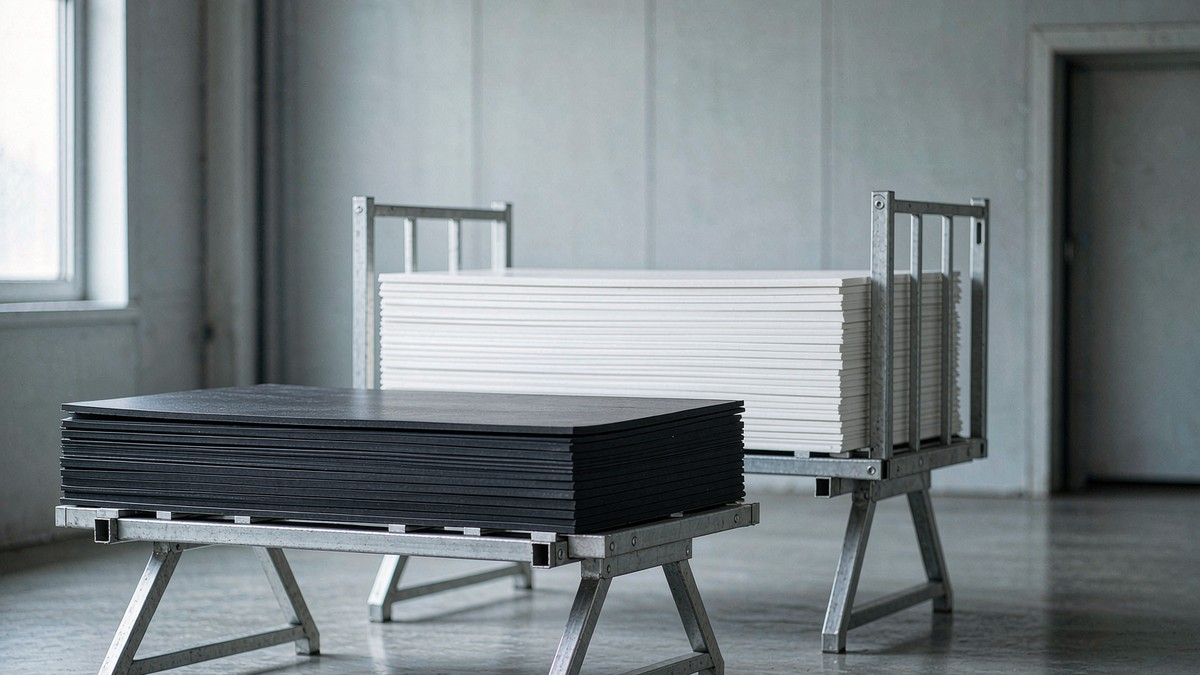
Chinese POM ex-works prices dropped by up to RMB 700 a tonne this month. Complaints about regrind, thickness tolerance and batch drift moved the other way.
Prices Came Down In Two Steps
China's POM market moved lower twice in November. The first leg came in the week to 13 November, when methanol in Chongqing fell from roughly RMB 4,050 to 3,655 per tonne — a drop of 9.75 percent — and producer inventories climbed to 35,000 tonnes, up 17.85 percent week on week. The second leg came five days later: several domestic producers cut ex-works prices by RMB 100 to 700 per tonne, and the Yuyao benchmark for YunTianHua M90 was marked down RMB 300 to RMB 11,600.
Both moves followed the same logic. Restarted plants are running at full rates, the seasonal demand lull is holding, and inventory is building faster than it is clearing.
The Quality Complaints Did Not Follow The Price Down
What buyers report on trade platforms and machining forums has moved in the opposite direction, and four complaints repeat.
The first is recycled content sold as virgin. POM-C plastic plate made with regrind brings voids, specks and a loss of impact strength that surfaces not at goods-in but three weeks later, when a machined part cracks in service.
The second is loose thickness tolerance. A sheet running 0.15 mm or more off nominal forces the shop to leave extra stock on every face, and that allowance turns into five to eight percent of the material written off as swarf.
The third is batch drift — performance shifting 8 to 12 percent between deliveries, so speeds and feeds get re-dialled for every new pallet. It shows up on POM-C round bar as much as on sheet, and it costs more in lost machine time than the material ever saved.
The fourth is paperwork. A missing RoHS, REACH or food-contact report stops an export order at the customer's compliance desk, long after the material has been paid for.
Why Price And Quality Moved Apart
The two trends are one story. When resin costs fall, every producer's margin compresses at the same moment, and the quickest ways to defend it are to buy cheaper input or to ship against a looser specification. Neither shows up on the invoice.
A Polyacetal Sheet is also the wrong place to economise quietly. Acetal carries internal stress from extrusion or compression moulding, and that stress leaves the sheet through annealing, not through cutting. Material that skipped the step, or that was made from regrind with an unpredictable molecular weight, will move after machining — and the shop, not the supplier, absorbs the rework. The same rule applies to antistatic grades: an ESD POM sheet that loses conductivity at a machined edge is not a bargain at any price.
What Changze Plastics Is Doing About It
Changze Plastics keeps to virgin resin, measures thickness and flatness before a sheet leaves the plant, and sends compliance documents along with the order. You are welcome to contact us.