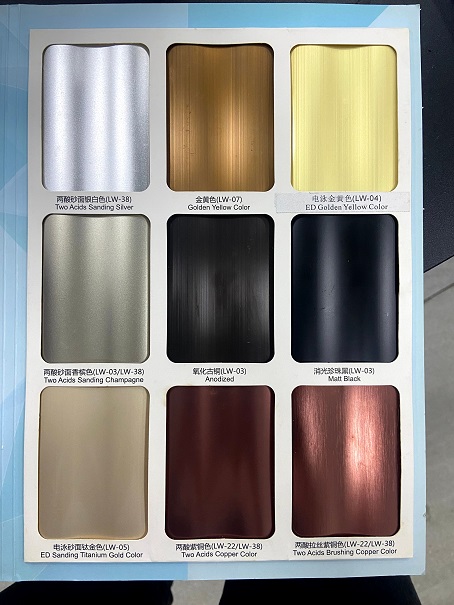
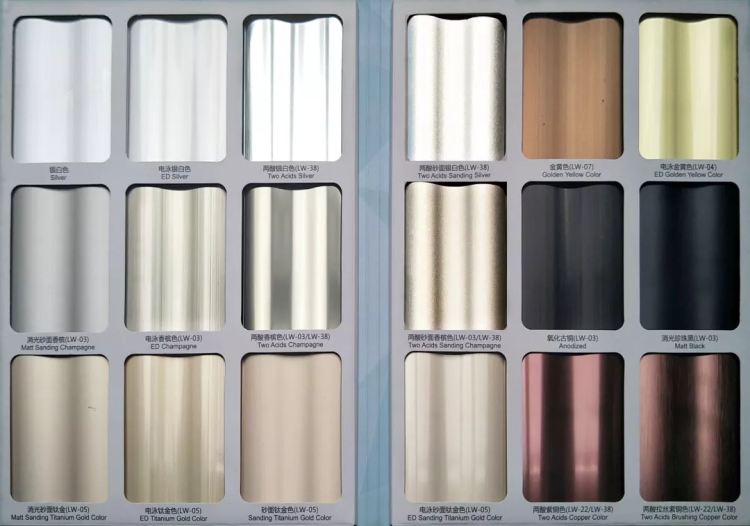
During the Aluminium Anodizing Process, an Anodizing Agent is used to create the anodized layer on the aluminum surface. The quality and consistency of this agent play a role in the overall anodization result and can influence color uniformity. A high - quality Anodizing Agent, when applied correctly, helps in achieving a more consistent anodized layer, which in turn is beneficial for minimizing color differences during the coloring step.
The concentration of each component in the bath solution has a direct impact on the color difference. Generally speaking, the main salt concentration increases, the coloring speed increases, and the color tone deepens. Sulfuric acid is added to the solution in order to maintain the coloring stability. If the concentration is too high, the tank and parts are easy to attach hydroxide. If the concentration is too low, the H⁺ concentration is too high and the competitive reduction will result in a decrease in the coloring speed, or even no coloring. H₃BO₃ plays a buffering role in the film hole, and tin cannot precipitate without adding boric acid in the tin salt solution, resulting in color difference and dispersion of the profile. Accelerator plays a catalytic role in nickel salt solution to ensure that Ni²⁺ can be precipitated smoothly when the solution pH is about 1, and maintain good color uniformity and stability. The stabilizer is composed of complexing agent, reducing agent, antioxidant and electrode oxidation inhibitor to prevent the oxidation and hydrolysis of stannous oxide and maintain the coloring stability.
Stirring the bath solution is beneficial to the uniformity and reproducibility of color difference. Generally, single nickel salt solution can be stirred with compressed air, but single tin salt or double salt can not be stirred with compressed air. Inert gas can be considered for stirring, or mechanical stirring can be used to prevent the oxidation of stannous ions. Circulating filtration of the color solution is also a way to maintain the stability of the solution. After the anodizing is complete, proper care of the anodized aluminum is required. Cleaning Anodized Aluminum should be done gently to avoid damaging the anodized layer and potentially affecting the color. Using appropriate cleaning methods and products helps in preserving the color and overall quality of the anodized aluminum.
Stirring the bath solution is beneficial to the uniformity and reproducibility of color difference. Generally, single nickel salt solution can be stirred with compressed air, but single tin salt or double salt can not be stirred with compressed air. Inert gas can be considered for stirring, or mechanical stirring can be used to prevent the oxidation of stannous ions. Circulating filtration of the color solution is also a way to maintain the stability of the solution.