Drying Agents for Container Humidity Control: Dosing a 20ft or 40ft Box (2026 Data)
A 40ft container's air alone carries about 1.7 kg of water vapour at 30°C and 85% RH — before you count a single wooden pallet — and that figure, not the number of bags hanging by the door, decides whether your cargo lands dry. Drying agents sized for cartons fail at container scale for a simple reason: the moisture load is five to ten times larger and the steel box cycles through dozens of temperature swings over 30–40 days. Here is the dosing that actually holds, and the placement that stops cargo sweat before it starts.
1. Which drying agent can actually hold humidity control inside a steel container?
Calcium chloride, in almost every case. Silica gel is a carton-level tool: it does not have the capacity to carry a container's moisture load across a 35-day voyage, no matter how many desiccant packets you tape to the walls.
The arithmetic is unforgiving. A 20ft container holds 33 m³ of air. At 30°C and 85% RH that air contains roughly 0.85 kg of water vapour; a 40ft at 67 m³ holds about 1.7 kg. Then the cargo adds its own: twenty hardwood pallets at 18% moisture content hold around 72 kg of water, and dropping to a 12% equilibrium releases roughly 24 kg into the box. Add corrugated cases conditioned at 85% RH and you are defending against tens of kilograms, not grams.
Condensation risk follows. Drop a 40ft from 30°C to 18°C at high humidity and about 1 L of water condenses — on the ceiling, on the upper walls, and eventually on your cartons. That is container rain. Cargo sweat is the same water, released from the goods rather than the walls.
| Container | Dry route, under 21 days | Tropical or 30+ days | Hygroscopic cargo |
|---|---|---|---|
| 20GP (33 m³) | 4–6 kg | 8–10 kg | 12–14 kg |
| 40GP (67 m³) | 8–12 kg | 14–18 kg | 20–24 kg |
| 40HQ (76 m³) | 10–14 kg | 16–20 kg | 22–26 kg |
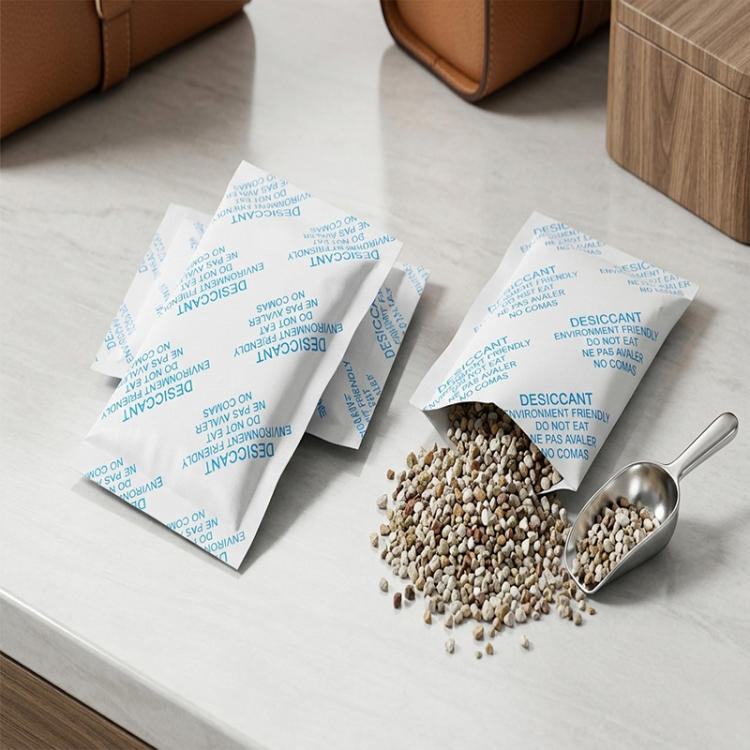
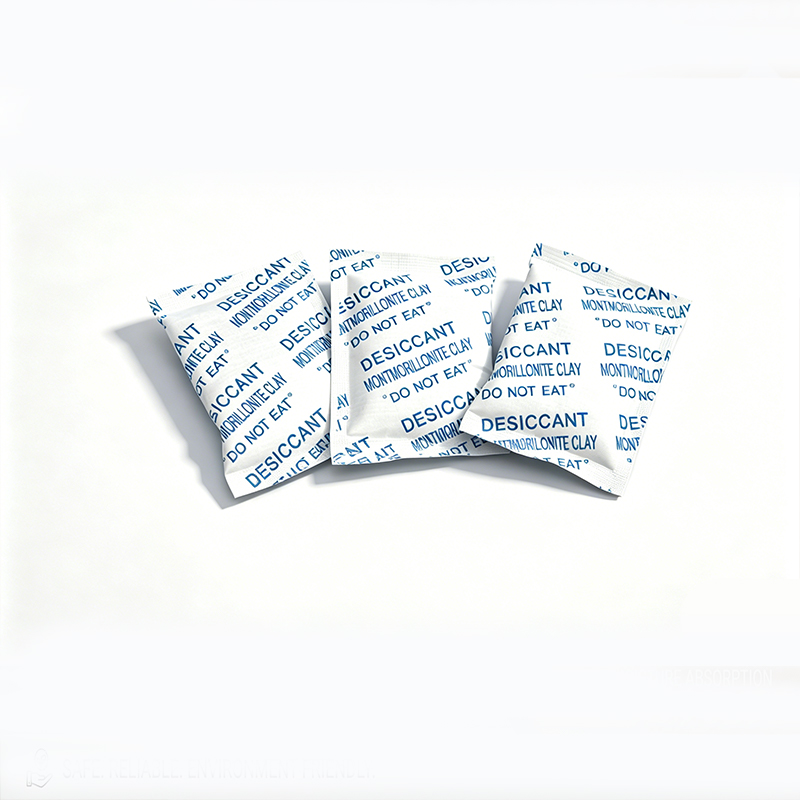
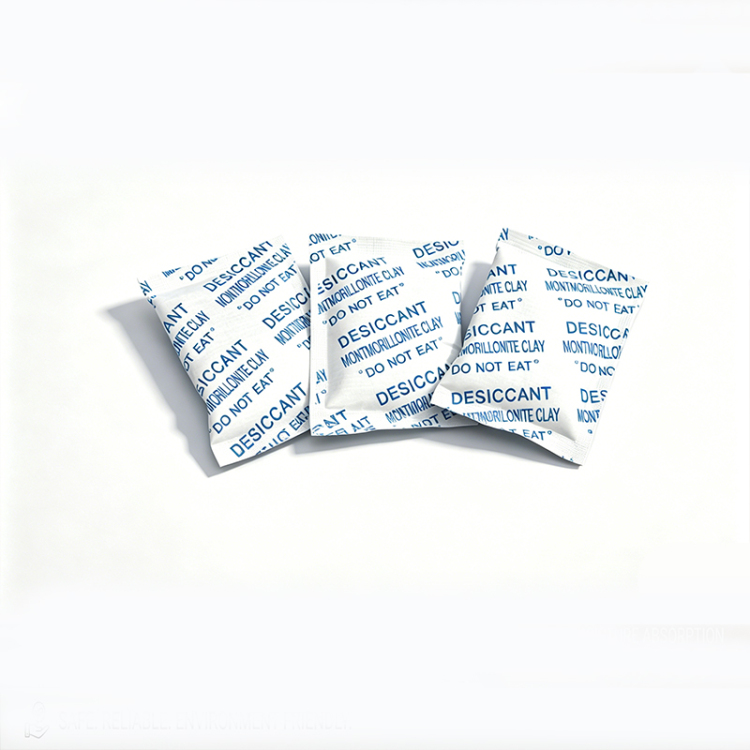
Read the capacity column as a purchasing instruction. Replacing 10 kg of calcium chloride with silica gel means buying 30–40 kg of desiccant, and still ending the voyage with a saturated product. The only legitimate use for desiccant packets at container level is inside the individual carton, protecting the product from the headspace it sits in — that is a different job with a different calculation.
Two pre-loading checks that decide the outcome
- Container floor moisture. The plywood floor is a sponge. Anything above 18–20% moisture content will release litres over a long voyage; reject the box rather than compensate with more desiccant.
- Vent and door seals. Tape the vents shut before loading. An open vent turns your drying agent into a dehumidifier for the Pacific, and it saturates in days rather than weeks.
✅ Bottom line: Size container protection in kilograms of calcium chloride, not in sachets — and reject a wet container before you buy more desiccant.
2. How much drying agent per container, and where does it go?
Plan 4–6 kg of calcium chloride for a 20ft on a dry route, 8–12 kg for a 40ft, then add 50% for hygroscopic cargo and another 50% for voyages over 30 days. Under-dosing is the common mistake, and it is worse than no protection at all because it buys false confidence.
Under-dosing fails quietly: the agent saturates in week two and the cargo sits unprotected for the remaining four weeks, with the paperwork still saying "desiccant used". Over-sizing by 20–30% costs a few dollars against a claim that runs into five figures. That asymmetry should settle most internal arguments about the purchase order — and it is why buyers who compare drying agents on unit price alone usually reverse that ranking once claims are counted.
| Container | Dry route, under 21 days | Tropical or 30+ days | Hygroscopic cargo |
|---|---|---|---|
| 20GP (33 m³) | 4–6 kg | 8–10 kg | 12–14 kg |
| 40GP (67 m³) | 8–12 kg | 14–18 kg | 20–24 kg |
| 40HQ (76 m³) | 10–14 kg | 16–20 kg | 22–26 kg |
Treat these as planning figures and confirm against your route, season and cargo. A worked example: paper from Indonesia to Belgium, 40 days, 40ft — 15 kg baseline, plus 50% for hygroscopic cargo and 50% for voyage length, lands at 23–25 kg.
Placement matters as much as quantity
- Hang bags high on the side walls, clipped to the lashing rings, spaced evenly down the length. Condensation forms at the ceiling first, at night, when the steel cools fastest.
- Stand poles in the void spaces between pallets, where air actually moves.
- Lay blankets over the top of a full load rather than under it. Desiccant buried at the bottom is decorative.
- Keep bags off moisture-sensitive surfaces and clear of doors and vents so inspectors can reach them.
Add a humidity indicator card at the door end and photograph it at loading. It costs cents, and it is the only evidence you will ever have that humidity control was actually in place — most insurers treat "natural condensation" as buyer negligence unless the countermeasure is documented.
For exporters running repeat lanes, the cheaper move is to standardise: one 40GP kit of a fixed weight, pre-packed, with the certificate and indicator card inside. Cress builds these as custom kits with OEM labelling, which removes the per-shipment calculation and the per-shipment argument.
✅ Bottom line: Dose by container volume plus cargo moisture, then over-specify by 20–30% — the extra kilos cost less than the claim.
FAQ
Q: How much desiccant for a 40ft container of furniture? A: Furniture is hygroscopic — kiln-dried timber and upholstery both release moisture — so budget 20–24 kg of calcium chloride on a tropical route, hung high and evenly spaced. Confirm against the actual moisture content of the timber, not the invoice description.
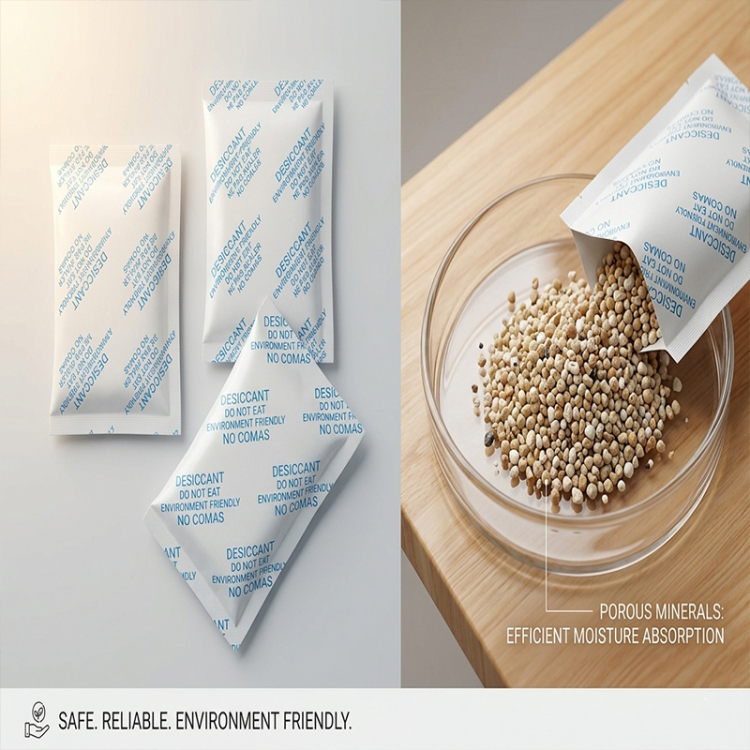
Q: Can container drying agents be reused? A: No. Calcium chloride is one-way: it deliquesces into a gel or brine and cannot be regenerated economically. Silica gel can be regenerated at 100–150°C, but at container volumes the handling cost exceeds the material cost — which is why desiccant packets make sense inside cartons and not on container walls.
Q: Do you supply container kits and OEM carton desiccants together? A: Yes. Suzhou Cress Desiccant Co., Ltd. produces calcium chloride container bags, poles and blankets alongside silica gel, clay, fiber and molecular sieve desiccant packets from dual plants in Suzhou and Anhui — 4,500 m², 80 automated machines, ISO 9001 and REACH compliant. One supplier, one set of certificates, one shipment.
CTA: Send us the route, not the guess
Tell us container type, cargo, voyage length and destination port. Cress returns a dosing plan with the bag count, placement diagram and the certificate pack your buyer will ask for — free, and usually within one business day.
Ask your current supplier what humidity they guarantee at destination. If the answer is a bag count rather than a relative humidity figure, you are buying hope.
Cress is a wholesale desiccant manufacturer and China factory serving exporters and freight forwarders in more than 20 countries, with OEM, ODM and private-label container programmes and bulk supply for packaging lines.