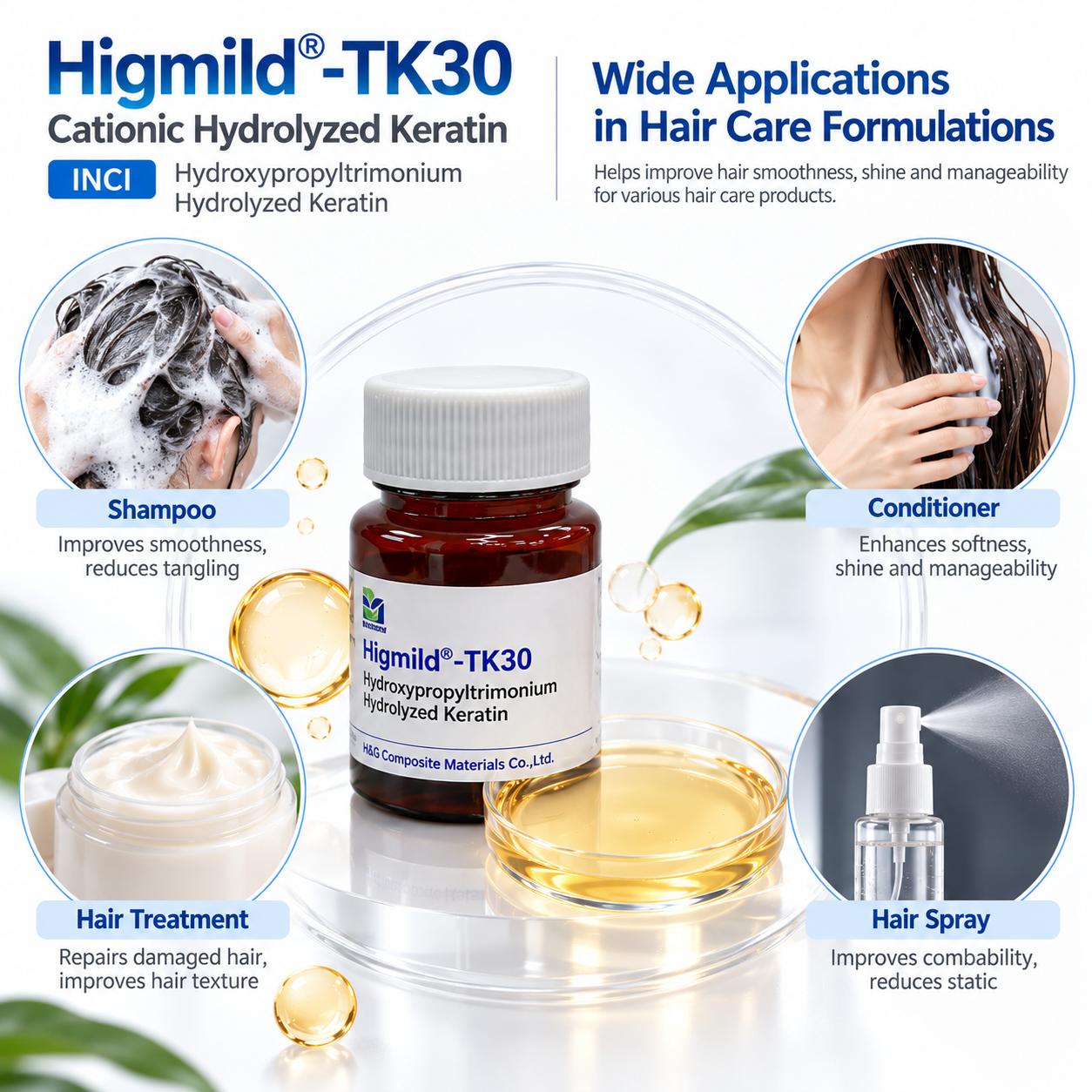
Cationic keratin is used to improve the feel and manageability of damaged hair, but incorporating it into shampoo presents a different challenge from adding it to a conditioner. In a cleansing formula, the positively charged protein derivative comes into contact with surfactants before it reaches the hair.
Anionic surfactants are particularly relevant. Their interaction with cationic materials can influence the shampoo's appearance and viscosity, while the conditioning effect still needs to be assessed after rinsing.
Why Cationic Modification Matters
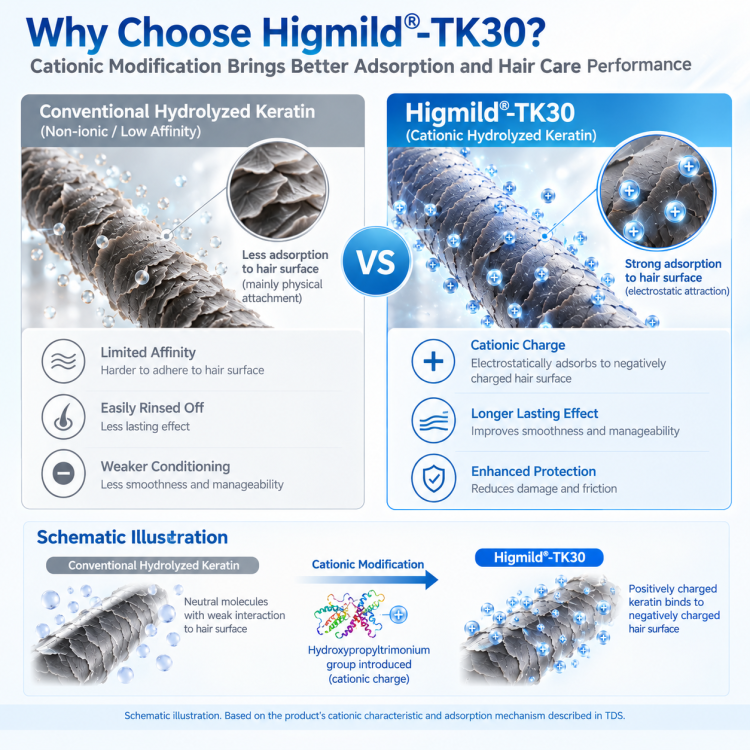
Quaternization introduces positively charged ammonium groups into hydrolyzed keratin. These groups promote interaction with negatively charged sites on the hair surface, particularly where chemical treatments have altered the cuticle.
The same charge characteristics can affect how the ingredient behaves in an anionic surfactant system. Hair affinity is therefore only one consideration when selecting cationic keratin for shampoo.
Compatibility with Shampoo Surfactants
Adding cationic keratin to an existing shampoo base may change its clarity, viscosity or physical stability. The response will vary with the surfactant blend, ingredient concentration and other materials in the formula.
In a transparent shampoo, haze appearing after addition is worth investigating. Comparing the modified formula with the original base can help identify whether the change is associated with the new ingredient. Surfactant composition, addition level and processing sequence are useful variables to examine.
A clear appearance immediately after mixing is not enough to establish stability. Viscosity and visual changes during storage also matter.
For opaque shampoos, clarity is not a target property. Phase separation, viscosity drift and conditioning performance provide more useful information.
When developing a hair care product that combines cleansing and conditioning, the ingredient should be assessed in the intended surfactant base rather than in water alone.
What Remains After Rinsing?
A shampoo can be physically stable without providing a noticeable conditioning benefit.
Cationic keratin can associate with negatively charged regions of the hair surface, potentially improving smoothness, combability and static control. However, its positive charge does not establish how much material remains on the fiber after washing.
A useful comparison is the original shampoo base against the same formula containing cationic keratin. Wet combing can be assessed after a consistent washing and rinsing procedure, followed by dry combing and hair-feel evaluation.
The distinction becomes important when selecting materials for professional hair care formulations. Cationic proteins, conditioning polymers and silicone emulsions may all improve manageability, but their contributions to lubrication, smoothness and after-feel are not necessarily identical.
For damaged hair, improved combability and reduced surface friction are meaningful conditioning outcomes. They should not be presented as proof that chemical damage to the original hair structure has been permanently reversed.
Formulation Checks Before Scale-Up
Screening should begin with a control formula and a version containing the selected cationic keratin. Keeping the remaining ingredients and processing conditions consistent makes the comparison more useful.
If haze or viscosity changes occur, examine the addition level, surfactant composition and order of incorporation. Adjusting one variable at a time can help identify the source of the change.
Storage observations should include appearance, viscosity and any signs of separation. Dilution behavior may also be relevant for rinse-off products, particularly where interactions between charged ingredients could change as surfactant concentration decreases.
Hair testing addresses a separate question. Consistent product dosage, washing, rinsing and drying conditions are needed to compare wet combing, dry combing and after-feel.
An ingredient may improve hair feel while creating an unacceptable viscosity change. Another may fit the shampoo base without producing a useful difference in combability. Both outcomes are relevant when deciding whether to retain it in the formulation.
Higmild®-TK30 in Shampoo Development
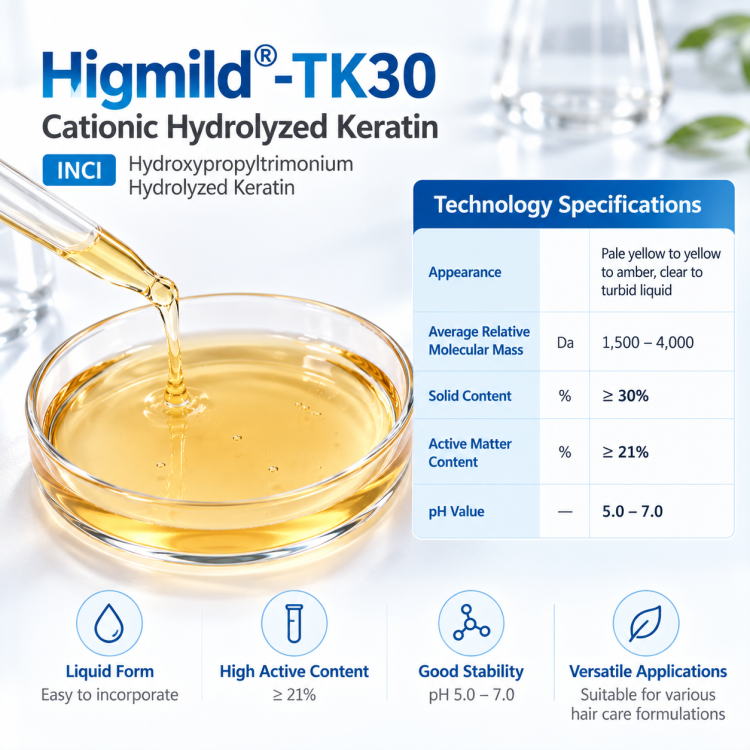
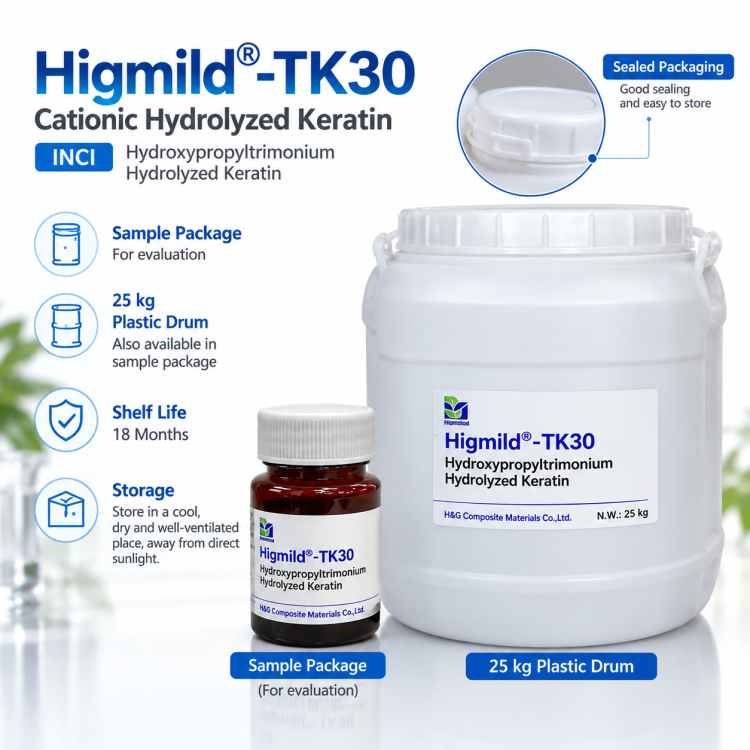
Higmild®-TK30 is produced through enzymatic hydrolysis of keratin followed by quaternization. Its INCI name is Hydroxypropyltrimonium Hydrolyzed Keratin, and its specified average relative molecular mass is 1,500–4,000 Da.
The technical data sheet lists shampoos, conditioners, perming and coloring-related products, and daily hair sprays among its applications. It also describes hair affinity, smoothness, antistatic conditioning and shine.
For a shampoo project, TK30 can be screened in the chosen surfactant base, with attention to physical stability and conditioning after rinsing. This allows its contribution to be assessed against the performance of the original formula.